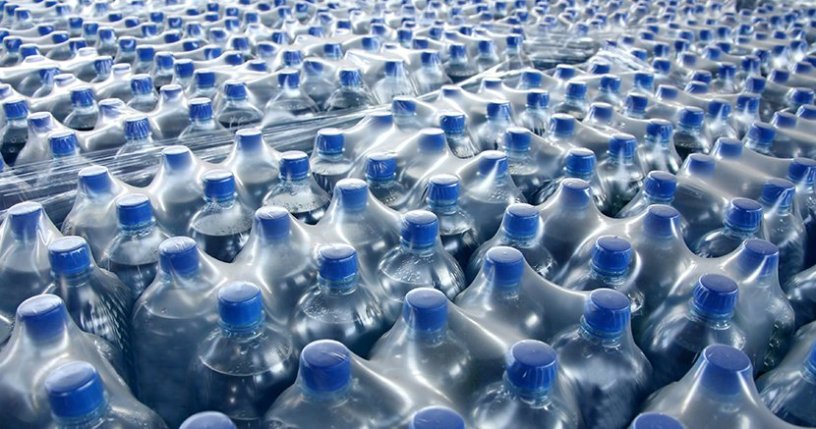
I live in Hilton Head, South Carolina. A tourist destination, yes, but also a fragile, beautiful ecosystem of marshes, rivers, tidal pools, turtles, egrets, eagles, and other natural wonders. Any day, from May 1 to October 1, that I am forced to travel to the grocery store, I will see customers loading up their carts with dozens of 10 oz. plastic bottles of water. Unnecessarily, these bottles come in clusters of 36 or 48 wrapped up in sheets of additional plastic (to keep them fresh??). These people then take these “pollution bombs” and explode them throughout the island. The bottles end up everywhere – bike trails, parking lots, roadways, and, of course, the beach. The most conscientious of these tourists make sure that at least a few bottles end up in our beautiful lagoons, along with the gators and cranes.
I am of the opinion that bottled water represents the nadir of our capitalistic, materialistic society. You may say, “C’mon, Mike, it’s just bottled water.” No, it’s really not “just bottled water”. The selling of bottled water in this country is a stellar example of the power of marketing manipulation of the American consumer. Madison Avenue convinced us that we couldn’t live without water in a bottle that they would then sell to us – “create a market and then fill it”. Except for a few cases of natural disasters or failure of community water systems, there is no need for bottled water in our society. In addition, under no situation, is there ever a need for a 10 oz. bottle of water. Ever.
Invariably, when a materialistic society creates an unnecessary market and then fills it, there is a downside. What could possibly be the downsides to selling billions of small, plastic bottles of water every year to a gullible American public?
Safety – The Environmental Protection Agency requires municipal water systems to meet stringent water quality standards for over 75 contaminants ranging from microorganisms to radionuclides. These drinking water standards are based on rigorous scientific data factored into conservative risk analysis models. Daily, or more often (depending on the size of the system), sampling is required. Finally, the results of the testing is available to the public and, in fact, must be reported to the public served by the system at least once a year. Bottled water is not tested by the EPA, although it does meet similar standards set by the FDA. Since much of the water bottled in the US comes from municipal systems (yes, you read that right), it is safe to assume that bottled water meets safety standards. Except for the fact that water tends to leach contaminants from the plastic the longer it remains in the bottle, though that seems to be limited to antimony and a few other chemicals at low levels. So, there is no safety benefit to drinking bottled water and there might be a small increased risk of exposure to certain leached contaminants.
Cost – Americans spend $12 billion annually on bottled water. If a typical American drinks 8 glasses of water per day for a year from a tap the cost is approximately 50 cents. Just like the rapper. For a year. If the same American drinks his/her water entirely from bottles, the cost is approximately $1,400 per year or about the cost of a summer week’s rental of a nice condo on Hilton Head. That’s money spent to drink water that is not safer or better tasting than tap water.
Waste – Bottled water is an environmental disaster. Americans buy 50 billion bottles of water per year. Americans throw 38 billion bottles in the trash (not recycled) each year. The average American throws 167 bottles away every year. We throw away $1 billion in plastic as we toss those bottles, not even considering the inability of normal natural processes to break down plastic or the damage these bottles do to our marine and bird wildlife. We use 17 million barrels of oil to produce the plastic bottles, enough to power 190,000 homes for a year, and millions of barrels more transporting these silly products.
Taste – There’s really no difference in taste between municipal tap water and bottled water. That’s not just me speaking. That statement represents the results of dozens of taste tests conducted by different agencies and groups over years of testing. Now, a person drinking bottled water will say it tastes much better than their tap water. That response is the result of approximately $1.2 billion in bottled water advertising over the past year. Of course you think it tastes better, you spend $12 billion a year on that water. It better taste better.
So, in summary, Americans spend billions of dollars annually in stores on a product that is continually piped into their homes at a fraction of that cost. The expensive product is impossible to biologically degrade and goes into our landfills, waterways, paths, and seacoasts to the tune of 38 billion bottles per year. And to top it all off, the water tastes the same as the tap water that is piped into their homes. The quote is attributed to P.T. Barnum, but it is really the American advertising credo, “There’s a sucker born every minute.”
 Mike's Musings
Felling informed and guilty. Well done!
LikeLiked by 1 person