AN ASIDE TO MY READERS: I am taking this opportunity to inform you that, as of today, I am resigning as Commissioner of the National Football League. I am taking this important career step to spend more time with my family (family members vehemently oppose this move) and to, perhaps, write my memoirs (for which no one is clamoring).
If Alina Habba, the famous garage company attorney, can resign a job that she didn’t have, then I feel that I should be afforded the same opportunity. Her resignation got front page coverage from the New York Times. I’m hoping for a mention in the Hilton Head “Island Packet”. I’m waiting by the phone. The outrageous egos of these extremely limited people would be hilarious except for the inherent danger that is lurking.
Now on to “branier” subjects. (Someday, you’ll love that pun.)
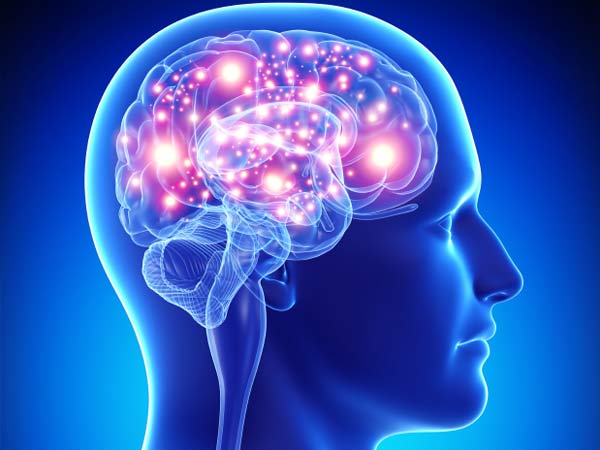
One of the truly great benefits of retirement is your ability to pursue a wide range of interests, answerable to no one. One area that has fascinated me my entire life is the human brain. The complexity and intricacy of that organ is a source of wonder. Your brain is you. It is a gelatinous, 3 pound mass that sits inside your skull and atop your spinal column, but it really is basically you. You are your brain. Your brain is you. How could its functions and development not captivate you? Let’s assume it does.
Given our mutual interest, I’d like to spend a few paragraphs on a recent (October 2025) paper published out of Cambridge that set out 5 eras of the human brain’s topological development. What is discussed below is from the published paper, not a secondary reference.
In neurologic research, topology is the study of the complex periods within which neural connections are organized and are “associated with key cognitive, behavioral, and mental health outcomes.” Analyzing connectivity in the brain by applying statistical and imaging methods far beyond the scope of this essay, this study identified 4 major topological turning points across the lifespan – around ages 9, 32, 66, and 83. The results indicate that brain development is not linear over a lifetime and that these age points represent a significant departure in integration development. I hope that makes it clear.
Childhood (0-9) – The first few years of life are marked by consolidation of synapses and rapid growth of both gray and white matter. In early life, the brain is growing and beginning to become the complex organ of adulthood. This period ends with the onset of puberty (8-13) and aligns with key cognitive and behavioral developmental milestones.
Adolescence and Early Adulthood (9-32) – Topological development remains consistent throughout this entire period even though adolescence ends sometime in the early 20’s, depending on cultural and social factors. Integration increases as does efficiency throughout this period.
Adulthood (32-66) – Age 32 is the strongest topological turning point in a lifespan. Areas of brain integration and efficiency decrease and white matter volume begins to decrease, also. This is the longest epoch, covering about 3 decades. This period represents a plateau in intelligence and personality. Put in the vernacular, this is pretty much as good as it gets. Also, the early 30’s represents the high point in an individual’s intelligence. Sorry.
Early Aging (66-83) – The researchers did not find any truly significant topological changes in this epoch compared to “Adulthood” beyond an increase in modularity of the brain (less connectivity). However, this period coincides with increases in the incidence of hypertension and dementia, both linked to brain aging and cognitive decline.
Late Aging (83-90) – Because of the small numbers of participants in this category, this study did not have adequate statistical power to assess the multiple metrics of the previous epochs. Probably, that’s a good thing from my perspective.
These are new findings and the results will need to be repeated in other populations and interpreted by other researchers. That’s how science works (someone should tell HHS). I am not surprised that our brains do not develop linearly over our lifetimes, but that there are distinct eras where the connectivity and modularity of our brains evolve at different rates. I find it interesting, and perhaps I shouldn’t, that these turning points coincide so closely with human physical development. The fact that the brain changes development trajectory at the point that puberty begins is perfectly logical. So much changes at the beginning of puberty. At first glance, there is some concern about the Adolescence period lasting into the early 30’s, but then you think of the typical American male and it makes sense, particularly to the typical American female. Changes in the early 60’s, primarily tied to the ravages of hypertension and dementia, are all too easy to understand. It is interesting to note, though, that this research did NOT find significant topological changes in the brain for the Early Aging period beyond the effects of hypertension and dementia, which I consider external factors. I find that incredibly hopeful for people who control their hypertension and maintain their social contacts and intellectual pursuits.
I was a bit surprised that there was not a significant turning point at age 55 – not for a physiologic reason, but more for an observational one. That great American philosopher, Bruce Willis, once said, “At age 55, men become absolutely invisible to women. It’s like you’re not even standing there.” Since that is so true, I thought that research would have shown it in the actual brain, somehow. Loved Bruce Willis!
You may read this essay and ask why I shared it. I got no answer. I found it interesting and thought some of you might also and I’d save you from reading a very technical 13 page scientific paper. So, a little thanks?
Be good. Please stay healthy. Help those less fortunate this holiday season. I know you already do. That’s good.
Post Notes
*I figured out this morning that I spend $500 per year on apples. On apples! 365 days a year X 1.40 per apple = $511. For apples. How are less fortunate families affording healthy food? Guess what? They’re not.
* “It’s cold here in the city”. I am freezing today and it is 45 degrees out. I’ve become such a baby living here in The LowCountry. I worked through high school at a gas station – filling cars, changing tires, changing oil, etc in the coldest weather that the mountains of Pennsylvania could dish out. 7-8 degrees. Wind chills below zero. Snow and sleet coming down. Now, I’m sitting in my study looking outside at 45 degrees and trying to talk my dog out of going outside for a walk. What’s become of me? I am but a shell of my former self.
*At the risk of repeating myself, I highly recommend “The Sense of an Ending” by Julian Barnes. Man Booker Prize winner of a few years ago. It’s probably not for everyone, but I consider it great literature.
*Also, if you haven’t watched “Slow Horses” with Gary Oldman on Apple TV, you should be ashamed.
 Mike's Musings