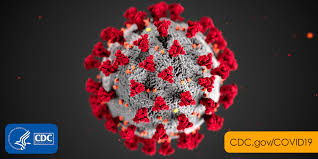
COVID continues to ravage populations around the world, shutting down societies, overwhelming hospitals, and rapidly filling overflow morgues. The number of hospitalized and dead rises daily to truly frightening heights. Perhaps the most chilling aspect of the pandemic is that the COVID virus has not yet begun to really impact Africa. Sleepless nights over that scenario. How will the African nations handle this pandemic if the infection spreads at the rate that it has in other nations?
The good news, and this really is good news, is that the social distancing measures that have been adopted in many areas seem to be surprisingly effective. The New York curve appears to have been flattened much earlier than I had thought possible and with greater results than any of the projection models had shown. New York is not alone – non-pharmaceutical interventions are the one bright spot so far in this nightmare. If we don’t back off too early, the first wave of COVID will be far less lethal than had been predicted. First wave.
As you might have guessed from the title, this essay will be focused on testing – the single most important weapon for the public health community in fighting an outbreak of disease. As I am going to try and show today, rapid and accurate testing is critical throughout the entire timeline of a pandemic, from identification of the initial cases all the way up to vaccine development and deployment. For COVID, testing is the linchpin of this country’s battle for the past, present, and future.
PAST- The US response to this pandemic has been frequently referred to as a war, particularly by our War President (God help us). Actually, though, that analogy works pretty well. This pandemic is similar to a war in that we are under attack by a relentless enemy bent on our destruction against which we must marshal our forces to protect our way of life.
If that is true, how did COVID get the upper hand on the richest nation in the history of the world? Well, if you consider that testing is our first line of defense in this battle (test, identify, isolate, and contact trace), the US failed miserably. Essentially, we had no effective testing to deploy to the states and cities in the initial stages of the invasion of our country. The result was that the virus slipped in behind our defenses and we’ve been behind ever since. Not to take the war analogy too far, but the US response to COVID was eerily similar to the French army’s response to Germany’s invasion of the Ardennes area in the early stages of WWII. Although the French leaders had ample evidence of Hitler’s intentions based on what had happened in Poland, Holland, and Belgium, they did not correctly deploy their considerable defenses effectively. The result was a massive German invasion and Europe’s second largest army defeated in under 4 weeks. Similarly, we had ample warning of what was to come from this outbreak, but because of a lack of response infrastructure, ineffective leadership from the White House, and a series of inexplicable mistakes by CDC and FDA, this country had no testing to identify and control the early cases. We have been playing catch-up to the virus ever since.
PRESENT- Current media and government reports on the outbreak are awash in numbers. Depending on your source, you can find COVID numbers for hospitalizations, ICU admissions, and positive test results all the way down to the county level. Of course, the positive test results have to be viewed critically. The US still does not offer a rapid, accurate test for the general population for this virus. Therefore, the case numbers that you see are not accurate in representing the full burden of COVID infections in our population. We still severely limit the testing, so there are many more cases than we are counting. That’s not to say that the publicized case numbers are not useful. These data give authorities essential information on the trends in the population and permits logical deployment of resources to the hardest hit areas. Or at least it should.
An example of how the tally of positive test results conveys important information to decision makers can be found in the town in which I grew up – Hazleton, PA. On March 27, the city of Hazleton had 2 positive test reports for the COVID virus. Three weeks later, Hazleton reported a total of 1000 cases. In a town of about 25,000, 4% were reported as being positive. Bear in mind, of course, that the 1000 cases does not really represent the true number of infections. There are, in reality, many more, but the trend is alarming and identifies a true “hot spot” for this infection. This type of explosion in numbers in only 3 weeks requires the focus of the State and Federal government to contain. A small, bankrupt city like Hazleton is at a loss on how to deal with this level of invasion, but there is no significant assistance coming from the State and without the State, the Feds surely are not going to ride to the rescue. These people are on their own – in the richest country in the world. I am watching in amazement.
FUTURE- Our epic failures in offering convenient, rapid, accurate testing for the COVID virus has hampered this country in this battle from the start. From January to the present, we have been fighting blindly and ineffectively against a superior foe. Surprisingly, our most effective weapons to date seems to be voluntary isolation and social distancing and these may allow us to flatten the curves as they crest in city after city and state after state. If we are successful, there will soon be a clamoring to re-open our society and get people back to work. That will be a tremendous relief on our economy and the psyche of our people.
How do we go back to work safely? Personal and workplace hygiene will be important, as will some measure of social distancing (handshakes are now part of our past forever), and, most importantly, the ability to quickly identify COVID cases so they can be isolated and treated. The US, and the rest of the world, will require rapid, accurate tests in the hundreds of millions. Tests that are just now being developed will need to be scaled up to those numbers before we return to work in significant numbers.
In addition, antibody testing to identify resolved cases who will probably be at least temporarily immune to the disease will have to be developed, approved, and scaled up. I’ve heard people on “the tv set” say that these people will be the backbone of our revitalized workforce in the near future. No, they won’t be the backbone because they will be too few in number to run an economic engine for a country of 330 million. For many public health and societal reasons though, we will still need/want to identify these people and we will need an increased emphasis on antibody testing to adequately accomplish that task.
One last point I would like to make about testing. We are currently going through the first wave of the COVID pandemic. There will likely be more waves on the way. If we begin to return to some level of the “new normal” and a second wave begins in certain cities or areas, we will need to respond to that second wave the way we should have responded to the initial outbreak in January. A critical feature in the US response to any future outbreak waves will be immediate case identification, isolation, and contact tracing. If we do it well, we will contain the virus. The essential basis for that future response will be rapid, accurate testing. We needed it then. We need it now. We will need it in the future.
This is just the mid-term. Not a good grade either.
 Mike's Musings