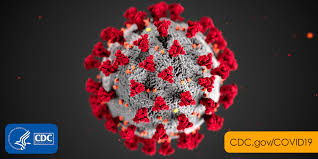
COVID continues to ravage populations around the globe. No one is really safe. Every day there is a new headline: US Passes China in Cases, Spain Passes Italy, US to Run Out of Ventilators, China Lied (shocker!), Trump Lied (bigger shocker!). All of us are being overwhelmed not only by the anxiety and stress, but also by the amount and complexity of information. As the 24 hour news barrage inundates us, we struggle to discern what is truly important and to make sense of what we are hearing. I am going to try to help people make some sense of the epidemiological jargon that has caught on with reporters, particularly about modeling.
First off, epidemiologists rely heavily on models. There are three foundations of epidemiology: surveillance data, investigative studies, and modeling. Then public health takes the epi results and promulgates policy to keep us safe. We’re seeing all of this happen in real time and on an expedited schedule with COVID. Our society is being forced to go almost instantly from surveillance data interpretation to fairly draconian policy measures. With that in mind, of course there will be some missteps and we are, unfortunately, experiencing those missteps almost daily. That’s no reason to become angry or to become suspicious. The whole scientific community is learning on the fly here. There’s a lot of adjustment required and desired.
Epidemiological models can be thought of as quite complex mathematical equations with many inter-related variables and many rules to follow in model development. Epidemiologists use models in all aspects of our work and, of course, models are used in many other fields, such as economics and meteorology.
The COVID models that have caused the most consternation recently are the models that are attempting to project health outcomes over the next few weeks in the US. When these modeling results are referenced by politicians or the media, they usually refer to some specific number like “240,000 US deaths predicted if everything goes right”. All epidemiologists cringe when we hear such pronouncements. For models to have any utility, their results must be considered in context with everything else we know and with a full description of the model’s limitations. That really cannot happen in our present society when everything has to be simple and has only 45 seconds to be discussed.
Predictive epidemiologic models are difficult to explain. How much did you enjoy math in school? See what I mean. One way to think about these models is that they take a great deal of data from the past and say when all of this occurred, this happened, so if all of this happens in the future in this way, this will be the outcome. That outcome is the projection and it is always presented as a range, from best case to worst case, if you prefer. All of the many variables in the model are based on data (some good data and some less good) and the variables interact with each other and the modeler weights some variables more than others and then it starts to get really complex. Models can be very helpful, but they are just one tool and must be thought of as only one tool and not the final answer. One other point about epi models – the only person who can really explain a model is the person who developed it. That modeler is the only one intimately familiar enough with the data and the process to be able to interpret what the model is really saying, and what it is not saying.
The difficulty in explaining and interpreting modeling results in epidemiology brings me to my final point today. Did you know that none of the scientists standing up with Our Leader every night for the COVID briefing are epidemiologists? Not one. Nor are there any epidemiologists on the White House COVID Task Force. Not one, but Ben Carson is on it (that should help you sleep at night). With the United States facing our biggest foe since Hitler, a virus running through our people, the senior policy advisors do not include one scientist trained in the study of disease in populations, not one epidemiologist. What about Deborah Birx? Nope. Jerome Adams, the Surgeon General? Naw. Surely Tony Fauci must be an epidemiologist? Nope, laboratory scientist. Well then, the CDC Director, Robert Redfield? Not even close – AIDS bench scientist (should not be CDC Director either, but that’s another story). The foremost agency in the world in investigating and understanding diseases in populations, the Centers for Disease Control, has been pushed to the sidelines in this, the most important outbreak in over a century. We cannot afford to keep those scientists on the bench in this fight. We need their expertise and, perhaps most importantly, their voices over the next few months. I get the feeling from talking to people that many think this is almost over. It is not. This is not almost over.
Final word. Models are a tool. A good tool, but just a tool. The modeling projections for what may happen over the next few months will probably be more on the mark than not, but what happens will fall within their range and not be a specific, exact number. The modeler who created the White House model will tell you that they did not project that 240,000 will die, but that number is somewhere in the range of what they projected. So, please take it all with a grain of salt.
Stay safe. Keep your distance. This will work, but we have to go through it. I wish you well.
PS: If things are really getting to you, put your buds in and put on Johnnyswim (I suggest “Say Goodnight Instead”) and just let Amanda Sudano’s voice transport you somewhere you’ve never been before. It will renew your faith. In what, I don’t know, but she WILL renew your faith.
 Mike's Musings