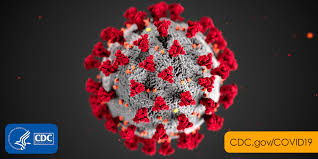
COVID-19 is still a mystery to all of us – the scientific community and the general public. At the present time, armies of scientists are investigating every aspect of this virus from the spike proteins on its surface to its mechanism of infection and the damage it does to the body. All aimed at developing an effective vaccine. While science searches for answers, the impacted population also have important questions that need answers or, at least, best guesses. I thought maybe we’d tackle a few of them today.
Before getting into today’s subjects, let me just quickly review my bona fides. I retired as a senior epidemiologist from CDC where for the last 11 years I directed an epidemiology division. I was then a Senior Epidemiologist at a large nonprofit scientific organization. I have been closely following this coronavirus since early January. My sole goal in these essays is to share some information and help people better understand what is happening during these convulsive times. I ask one indulgence – I realize that COVID-19 is the disease and the virus is actually named SARS-CoV-2. I am going to use COVID-19 for both. Chastise me for my laziness (my mother would), but that’s a lot of typing and I’m going to skip it.
What’s different about this virus?
First off, the virus that causes COVID-19 is a highly infectious, novel coronavirus that is traveling rapidly through non-immunized populations. In addition to being infectious, this virus can cause serious pulmonary illness in a subset of infected people with some infections resulting in death. This coronavirus causes more serious disease that the 2002 SARS coronavirus and is almost unrecognizable as being from the same family as the coronavirus that causes the common cold. Think of it this way: in the coronavirus family, this is the family member that no one wants to see show up for Thanksgiving.
The reasons for the greater virulence and infectious characteristics seem to reside in the virus’ spike proteins and they way they are able to attach quickly and effectively to the cells of the respiratory system. The spikes of this virus are able to attach to the ACE2 receptors on the surface of the respiratory cells and, by doing that, gain entrance to the cells. We’re not virologists, but if you think of the human being as a house and the COVID-19 virus as a burglar, then the ACE2 receptor is the lock. COVID-19 can open the lock. Cold viruses cannot. So, the protein spikes make the virus more contagious by readily attaching to cells and also more virulent by opening the respiratory cells through the ACE2 receptors. All in all – a bad little burglar.
Will I get it?
Possibly to probably depending on where you live, the level of your participation in the NPIs, and how your luck is holding up. The main public health purpose of the interventions aimed at “flattening the curve” is to protect our health care system from being overwhelmed by a tsunami of infected patients suffering serious effects. Flattening the curve doesn’t really prevent much infection. We just stretch them out over a longer period of time so our system can handle the numbers and have time to gear up. Most of the models project that a high percentage of us will eventually become infected before a vaccine is developed. Keep in mind though that the virus has a say in all of this. COVID-19 may recede from the population or may mutate to a weaker form. There’s really no reason to believe either of those scenarios will happen, but I will give you one bit of good news. These types of viruses virtually never mutate into a more virulent form while passing through a human population.
Will I die for COVID-19?
Almost certainly not. That answer should not be interpreted that this virus does not represent a serious public health issue. It’s simply a matter of numbers. There are 330 million of us in the US. Even if we lose 330,000 people to this disease (Good God, I hope not), you as an individual still only have a 0.1% chance of dying from this virus. Of course, if you’re under 65 and healthy your chances are infinitesimally small. If you are older and also have a pre-existing condition, you can still reduce your risk by practicing social distancing and other interventions. However, if you’re an octogenarian with COPD who just has to go to Kroger every morning because you “really like people”, your future might not be too rosy.
One quick word about the COVID-19 case fatality rate (CFR) that you may have heard about. Trying to establish or assess a CFR in the middle of a pandemic is a fool’s errand (bet you didn’t think you were going to see that phrase again in your life). You are pretty comfortable with the numerator data (deaths) but you have no idea about the denominator (cases). To give you an example, in early January in the Hunan Province, at the very initial phase of the outbreak, the CFR was estimated to be 17%. That’s a frightening CFR for a highly infectious virus. It also wasn’t real. My best guess, considering the mild and asymptomatic cases, when all of the dust has settled, the CFR for COVID-19 will be less than 1.0%. If I’m wrong, you can yell at me, but I think I’m right.
Will all these things that we are doing work?
Absolutely. Depending on how well we do them and how many of us do them. If 22% of the population in a given area practice social distancing and are sequestered in their homes and 78% go about business as usual, guess what – it will not work. Everyone reading this can work out for themselves that if the great majority of us stay away from each other and practice good hygiene, this virus will be significantly hampered in its goal of sickening all of us. This morning, China began lifting controls from Hunan Province as they once again reported 0 new cases – 8 weeks after shutting the area down. 8 weeks to reduce the virus epicenter to 0 cases. New York is in for a rough few weeks, but the impact would be much worse if their Governor had not decisively made a series of brave decisions aimed at limiting the transmission of the virus. The things we are doing will work, but many areas will still be horribly impacted.
When will we return to normal?
As Bill Clinton might say, define “normal”. I believe that the politicians (not the bravest among us) will begin to feel powerful pressure to lift these controls after 2-3 weeks. Those pressures may be offset by the public witnessing the calamity taking place in other areas around the country and around the world that have been earlier and harder hit by this virus. Most people will not want to face that chaos in their communities. If I had to project when we might begin to return to normalcy, I would say somewhere between 7 to 11 weeks. Even then, we will need to keep a careful eye on the epi curve and react quickly to any precipitous rise in case numbers.
So, that’s a few of the questions that I thought might have been on your minds. Nothing but good news here. Sorry this is long, but I wanted to answer the questions fully. I hope for a new essay in a few days (not this long) depending on where events take us.
One last thing, my last essay was on social distancing and other interventions. I’d like to add one more – secondary social distancing. You’ve never seen this mentioned by public health authorities or politicians because it is my own term. I made it up.
Secondary social distancing refers to the process of allowing/creating space for the other person/people with whom you are “sheltering in place”. This is certainly important for all spouses who have been married for more than one year (month?). Secondary social distancing is critical for long term health in sequestered situations. One or both of you may not survive this and your risk may have nothing to do with COVID-19. So, the next time you want to share some great idea with your partner and start with the phrase “You know what I was thinking . . .” THINK AGAIN.
 Mike's Musings