For more than 2 decades, groups of eminent scientists have convened quadrennially to review recent peer-reviewed, published scientific findings and create reports on the status of the world’s climate. These scientific panels have focused both on global (the IPCC) and U.S. domestic (The National Assessment) evidence and impacts. All told, over 7000 scientists have participated in these reviews. Their findings are peer-reviewed, open to public comment, and then published.
Throughout these painstaking processes of over 20 years, the analyzed data and model projections strongly indicate that the most significant manifestations of changes in our climate will be an ever increasing global temperature (with concomitant heat waves) and more frequent incidents of precipitation extremes (floods and droughts). Well, they’re here, and they’re awful, and they’re going to get worse.
(By the way, another FACT of climate change is sea-level rise, but I plan to write a separate essay on the draconian impacts of our rising oceans within the next week. Constant coastal flooding, where over 50% of the human population of this earth lives, deserves its own forum, I think.)
HEAT
As climate change impacts cover the globe, many cities in India and Pakistan will be unlivable. Temperature in the city of Ahmedabad in western India currently regularly approaches 112-114 degrees and recently soared to 118 degrees with a resulting increase in mortality (deaths) of 43%. The city of Ovargla in Algeria reached the highest temperature ever recorded in Africa of 124.3 degrees and the highest nighttime temperature of 109 degrees. A small city near Tokyo reached an all-time record of 106 with over 23,000 people hospitalized.
There are literally thousands of these type of horrific anecdotes around the world, but more important to the scientific community are the trends that have been seen over the last few decades. Data since the dawn of the Industrial Revolution show a consistent trend of increasing global temperatures since 1880 with an alarming increase of the slope since 1980 (0.3 degrees F per decade). 17 of the warmest 18 years on record have occurred since 2000, with the 18th being 1998. So, 18 of the hottest 18 years ever recorded within the past 2 decades. Also, each of the last 3 decades has been progressively hotter than any decade on record since 1850. These are facts – FACTS not opinions or even scientific interpretations. Scientific facts. Our world is getting hotter. Undeniably hotter.
Projecting out from our current crisis, the future looks much worse. Over the next 7 decades, 74% of the world’s population will experience 20 days or more of heat and humidity per year above what is now classified as deadly. Heat is making people around the world poorer and sicker. Outdoor workers, a huge portion of the population in developing nations, suffer from heat-related headaches and nausea which cause them to miss work and wages and reduces agricultural and societal productivity. Projections are that many productive agricultural areas will be unworkable in 50 years because of heat and precipitation extremes.
PRECIPITATION EXTREMES
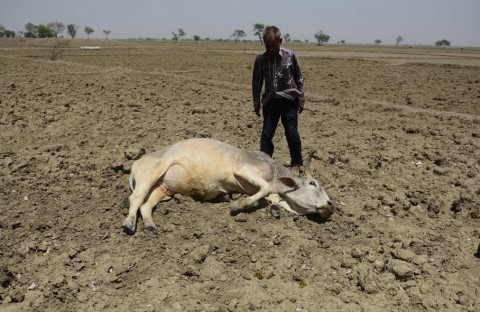
Hundred year floods in eastern Pennsylvania. Hundred year floods in New York. Hundred year monsoons in the Kerala state of India, killing at least 400, destroying the homes of over 800,000, and collapsing over 10,000 miles of roads. Over half of the Western US in some level of drought. 100% of Australia’s most populous state devastated by drought. Over 10 million acres of wild areas in the Western US destroyed by wildfire in 2017. These highlights are just a sampling of climate change’s precipitation-related devastation around the globe. Here’s the thing to remember, this will only get worse – every year and every decade. Worse than the current situation. Eventually, much worse. These will be looked on as “the good old days”.
In Australia, New South Wales is in pretty poor shape. 100% of the state is in drought and a good portion in severe drought. Australia’s Prime Minister (who just left office) Malcolm Turnbull, has created a cabinet level position of National Drought Coordinator and, in a speech to the country, stated, “Now, we are the land of drought.” Mr. Turnbull, however, adamantly continues to deny climate change proving that ignorant, blind leadership is not confined to this country.
The impacts of flooding and drought are far-reaching and horrendous. Famine, population displacement, refugees, and societal upheaval are just some of the effects. Both flooding and drought adversely affect the availability of potable water for human populations and livestock. Potable water is necessary for human existence and for civil society. For example, Lake Mead, the largest reservoir of fresh water in the Western US, is running out of water. Lake Mead is now projected to fall below a critical threshold by 2020 resulting in fresh water limits for western states and Mexico. For years, more water has been taken out of this lake than has been replenished. Climate change and regional-wide drought conditions have exacerbated this imbalance, but you just can’t take more out of something than you put back in without eventually arriving at an unavoidable conclusion. So, the question is, “What happens when Lake Mead runs out of water?” Not if, but when. Lake Mead is just an example. Reservoirs are running out of water around the world. This is coming and at a rapid rate.
I just wanted to give you all an update on how things are going. Let’s be clear. Climate change is here and the impacts are worse than were expected. There are more impacts, obviously, than I was able to cover in a short essay, but these convey the overall trends. So, what do we do? Well, we start to solve this with judicious use of the world’s resources and development of renewable energy sources. Quickly reduce our use and reliance on “big carbon footprint” energy sources like oil, natural gas, and especially, coal. Elect candidates who show some respect for facts and science and demonstrate a willingness to put the health and well-being of the people above “Big Energy”. Plan and adapt for the changes that are now inevitable while working assiduously to reducing future impacts by limiting carbon emissions.
One final thought, this is the best face of climate change that we will see for decades. Based solely on our gluttonous past energy activities, our world will get worse. We are now faced with the most basic question of whether we begin to be part of a solution or do we blindly continue down a ruinous path.
 Mike's Musings