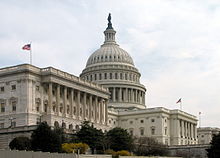
The United States Senate has often been referred to as the “world’s greatest deliberative body”. James Madison supposedly coined the term, but the title has been applied consistently over more than 2 centuries. And that was the plan. The brilliant minds that formed this country foresaw the Senate as being the careful, judicious legislative body in comparison to the reactions of the fevered House and the political machinations of each administration. To paraphrase Kipling, the Senate was designed to keep their heads when all about them were losing theirs.
What do we mean when we use the term “deliberative” in reference to politics? To me, deliberative means to arrive at a decision only after long and careful consideration. In politics, and in the Senate, that process of consideration implies discussion with colleagues and arriving at a meeting of the minds, probably involving some level of compromise. One of the reasons that this experiment in government that the US represents has been so successful is because the Senate has, for the most part, strictly followed a web of rules and traditions designed to ensure that level of deliberation. Sometimes stultifying rules and traditions, but nevertheless.
Don’t misunderstand me. The Senate has not always been an august body full of thoughtful, caring souls and worthy of blind reverence. More than any other aspect of the US government, the Senate was responsible for the passage of the cruel Jim Crow laws, enforcing segregation, and delaying civil rights for blacks for decades. Throughout the 40’s, 50’s, and 60’s, the chairmanships of the most powerful Senate committees were in the hands of Southerners from Mississippi, South Carolina, and Georgia. These men used the same rules and traditions that ensured careful deliberations and compromise to defeat every opportunity to lift black citizens to equality in our society and to keep them “in their place”. It finally took a Southerner, Lyndon Johnson, using the memory of a martyred President to break their stranglehold and pass the Civil Rights Act of 1964. It still galls me that the Senate Office Building is named for the worst of these racist segregationists, Richard Russel of Georgia.
Overall, though, the Senate’s careful deliberations and even glacier-like legislating has worked well for this country. There is good reason that the Senate is the body that conducts the actual trial for impeachment of Presidents or Federal judges and that the Senate, not the House, advises and consents on the Supreme Court candidates and Cabinet secretaries. In some ways, even more than the Supreme Court, the Senate carries the responsibility for safeguarding our form of government and our rights from the vagaries of politics and the hot-button issues of the day.
Has there ever been a time in this country when we needed more for the US Senate to play the role of deliberative, careful legislating body? The President is unhinged and not very intelligent; the Cabinet is composed of neophytes and troglodytes; and the House is rabid. This is the time for the Senate to follow history, remain above the fray, and act in the best interests of the Union.
The Senate is failing. At this time of crisis, the Senate is failing. There are many reasons: the politics of the extreme Right; the influence of big money since Citizens United; weak, cowardly leadership; and an increasing number of Senators coming from the House are just some of the reasons for the disappearance of the Senate from its historical role in our government. Most importantly, the Senate has recently abandoned many of its traditions and even overturned its rules to permit a simple majority to pass legislation and to approve nominees. These seemingly insignificant changes to move towards simple majority rule have altered the fundamental premises of careful deliberation and compromise that were required in Senate legislation. Each party, when in the majority, has whittled away at these rules to more easily consolidate their power and move their policies forward. What’s left is not pretty.
If you want to see how far the Senate has fallen, in both its traditions and results, you need to look no further than this latest abomination, the GOP’s health care plan. Essentially, this horrible bill was written behind closed doors by the Senate Majority Leader and his staff. Even conservative Republican Senators were not permitted to read any of the drafts. One member of the committee supposedly writing the bill, Mike Lee of Utah, stated publicly that he had never seen the bill or been in the room when it was being written. And he was on the writing committee for the Republican health care plan! When the Majority Leader finally emerged with his creation, he announced that he wanted to hold a vote on the bill the following week and was probably going to limit the debate on the bill to under 10 hours. A bill that would effect about 40% of Americans and over 20% of our economy was written by one very limited man, behind closed doors, with no input by other Senators of either party and would be voted on within a week with nearly no debate. This is “the world’s greatest deliberative body”? This is representative government? These are the men and women who are going to insulate us from that idiot in the White House?
The bill is horrible. The Senate’s plan is probably worse than the House’s plan, if that’s possible. This essay is not about the limitations of the proposal, but it is not a health care plan. This bill is just a way to give huge tax breaks to the rich and to prepare the ground for the tax reform legislation. Wait until you see what that is going to look like.
No, what I am writing about today is not limited to the health care debacle. Bigger than that. I believe that the US Senate is now just a mirror image of the House and that has never occurred before in this country. This is the worst time in our nearly 250 year history for us to lose the Senate’s strongest attributes. If the Supreme Court is to be a rubber stamp of the administration’s policies (which looks more and more likely), I truly can’t imagine a worse scenario for our government and our citizens. I guess my only advice would be – don’t be poor and don’t be sick.
 Mike's Musings