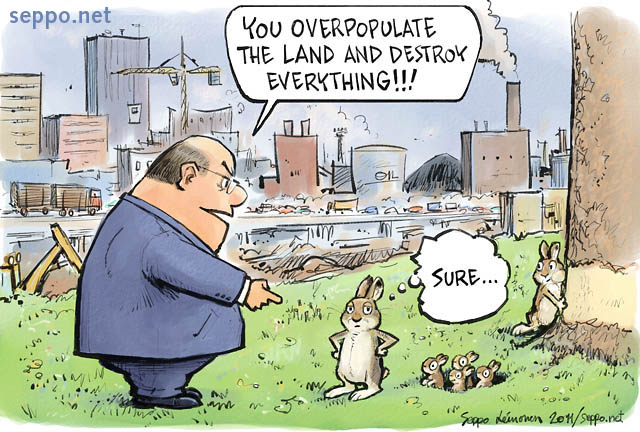
I was reading yesterday about the Anacondas that are rapidly proliferating in the Everglades. Nothing like a bunch of 20 foot snakes slithering around to make you sit up and take notice of the problem of invasive species. Anacondas will get your attention like water-choking plants or brightly colored frogs just can’t quite do. Yet, every invasive species introduced into a new environment wreaks havoc and upsets the incredibly important natural equilibrium.
Just what are invasive species? An invasive species can be defined as a plant or animal the is not native to a specific location which has the tendency to spread to a degree that can cause damage to the environment, human health, or the economy. It occurred to me when reading that definition that the most ubiquitous and damaging of all invasive species was man. Man is the only species that can be considered as invasive in every locale and environment of this globe. Actually, considering all the trash we’ve left up there after our space excursions, let’s include the moon also.
This is a big concept – man as an invasive species. How can you possibly fit all of man’s degradation of nature and deleterious impacts on our world into one thousand word essay? Well, you can’t, so let’s just look at a few examples through the 3 great prisms of our natural world: land, sea, and air.
Land
Simply put – we are overpopulating this world. This globe cannot sustain a population of 7.5 billion people. That’s the real crux of the matter. Sure, we can sustain this number for a few decades, but even this level of population (and it is growing) is consuming all of our vital natural resources at a ravenous pace. All of the very important focus recently about sustainability is really about overpopulation. We are exhausting our soils (plants grown today are much lower in vital nutrients than just 30 years ago), contaminating our water sources, and generating solid waste at an alarming rate (average American generates 4.6 pounds of waste per day and recycles only about 10%). Amidst all of this waste, millions of people (mostly children) die each year in Africa from lack of food or potable water. Man is equally destructive to all other species natural ecology. Approximately 78 million acres of forest are destroyed by our species each year – 150 acres every minute.
Sea
How could we, as a single species, screw up something as vast, grand, and essential as our oceans? Well, we did. Man’s activities are deteriorating the health of the oceans at an alarming rate. Our oceans are being heated by climate change, acidified by carbon dioxide absorption, and suffering from overfishing and general pollution. Near land masses, satellite imagery shows clearly that fertilizer and nutrient runoff are impacting coastal areas and creating giant “dead zones”. The acidification of the oceans is wiping out coral reefs around the world and impacting the behavior and territories of hundreds of species. Fish populations are depleted globally.
Air
What do we mean when we talk about how man has progressively degraded the air environment for all other species on earth? There are lots of ways to approach this topic: particulate matter, toxins, sulfates that poison the lakes and streams, pesticide use -the list goes on. But let’s take the large view and talk about man’s effect on “big air”. In other words – our atmosphere. In his unquenchable thirst for more and more energy, man is on the cusp of rendering the planet uninhabitable for thousands of species. We have caused a build up of carbon dioxide in the atmosphere that is heating the entire planet with calamitous outcomes for mankind and all other species that share our world. Again, there is really no doubt about this and even if we cease and desist right now, we are facing an uncertain future. By the way, we are not ceasing and desisting. When you look at current US policy and the future energy demands from China’s and India’s growing populations, we may continue to increase an already unsustainable level of carbon dioxide.
So, give me the elephant grass in Panama, the rabbits in Australia, the Asian carp of the Great Lakes, or any of the other thousands of invasive species found around the globe. Their problems are child’s play compared to the master invasive species of them all. The difference between man and all other destructive, invasive species is that, prior to disruption, all of those other species were originally part of an ecology where they lived in complete harmony with the world around them. When has man ever shown an interest in living like that?
 Mike's Musings