Woody Allen once famously said, “The brain. That’s my second favorite organ.” I don’t know how I might rank it, but it’s fair to say that the brain and its’ functions are pretty critical. Unless you’re in politics.
Over the last 2 years or so, I’ve been reading quite a lot on the brain, human behavior, and decision making. What I’ve learned is that scientific information on what drives and governs human behavior has advanced rapidly over the last decade and that knowledge is influencing our day to day lives currently, with greater impacts on the horizon. The days of Freud relating everything to subconscious desire to have sex with your parent are long gone. Thank God.
Somewhat greater than 40% of the average human’s daily existence is governed by habits. Habits run our lives. Not only run our lives, habits pretty much are our lives. When you wake up, how you wake up, what you eat, who you associate with, how you treat the people in your lives, your pleasures, your vices – all habits. I always thought that my regular exercise and dietary discipline meant that I was a superior human being. I probably still should be viewed as superior, but my virtues can almost exclusively be attributed to habit. Damn. So my discipline and someone else’s sloth are the same? Doesn’t seem fair.
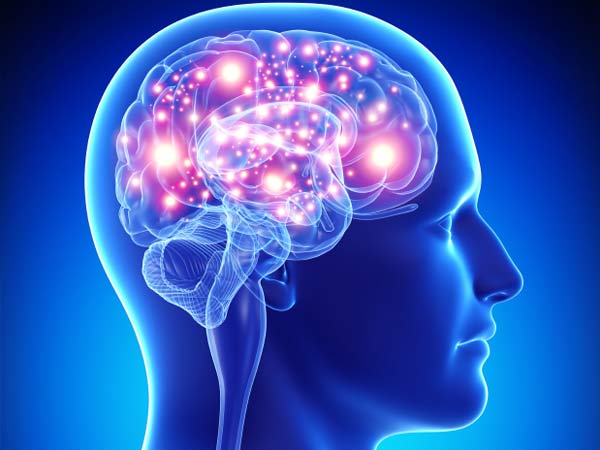
The ability of scientists to view brain activity through PET scans as subjects are exposed to stimuli or presented difficult tasks has permitted incredible discoveries on how the organic brain functions. Our habits are essentially well worn neuron pathways in our brains. Think of them as paths in the woods. When faced with similar circumstances, our brain takes the path of least resistance and our neurologic impulses follow the path – hence, a habit.
Interestingly, these habits, or pathways, can be reprogrammed. We know that. Many of us have broken bad habits or we’ve temporarily stopped them and then slid back. There are some habits that are integral to our lives and upon which other habits depend. These are called “keystone habits”. A keystone habit for me is exercise. For others, keystone habits might be smoking, gambling, overeating, charity work, religion, or others. People who participated in studies and changed these keystone habits have also been able to alter many other habits and changed their neural activity to such a degree that they essentially “reprogrammed” their brain. Their entire lives were changed.
There is so much more to this research, as you can imagine. One concern is that, as we learn more about the neural underpinnings of human behavior, this knowledge will be used by corporations and politicians to manipulate the populace. Don’t worry, that’s already happening. Essentially all sophisticated marketing from large corporations is now based on this science. We’re all just rats.
On a personal level, I’ve found that knowing the details of how the brain and neural pathways drive our behavior has detracted so much from the feeling of mystery and romance of the human mind. What is heroism? What is sacrifice? What is a mother’s love? Is romantic love just pathways and chemicals? How do neural pathways explain Mozart? Or even Milli Vanilli? Pathways and habits don’t fully explain the complexity that is known as a human being. A human’s behavior is more than just the sum of their neural pathways and, I think, all scientists would agree with that statement. But the field is fascinating and, of course, this essay discussed just one tiny aspect of what the science is discovering every year.
I hope one of my next posts will be discussing the Nobel Prize winning research about how we humans make decisions in our lives. Really fascinating stuff. I’m amazed that we even get through the day, to be honest.
Now, I need to figure how to get the neural pathways for each of you to force you to mindlessly come to this site each day and read my postings. More research required, I guess.
 Mike's Musings